Delegation in nursing: which tasks can you assign?
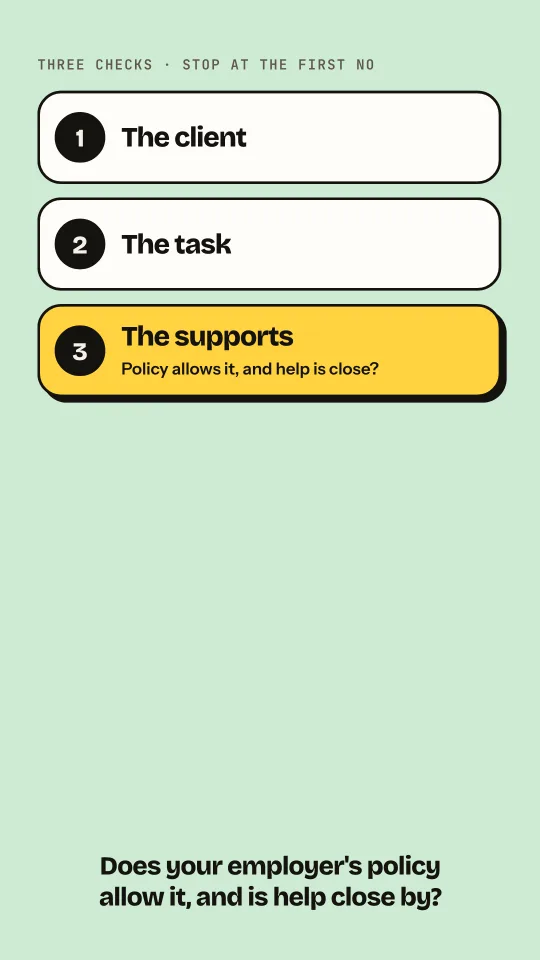
Three checks before a practical nurse assigns a task to an unregulated care provider: the client, the task and the supports.
- You keep the assessing, the planning and the evaluating.
- Assign a routine task for a stable client.
- A change in the client needs your assessment first.
A nurse can assign a task when the client is stable, the task is routine, and the supports are in place. If one of the three is missing, the task stays with the nurse. This guide explains the three checks, with one worked example.
What assigning a task means
Assigning gives someone else a part of the care. You keep the assessing, the planning and the evaluating. Many textbooks and exam guides call this delegation. This guide says “assign”, as the lesson does.
Three checks before you assign
Make the checks in order. Stop at the first “no”, and keep that task yourself.
| Check | Ask |
|---|---|
| 1. The client | Is this client stable, with needs that are well known and not expected to change? |
| 2. The task | Is it routine, with a result you can predict? A task that needs assessment or clinical judgment stays with you. |
| 3. The supports | Does your employer's policy allow it, and is help close by? |
A worked example: four clients at 08:15
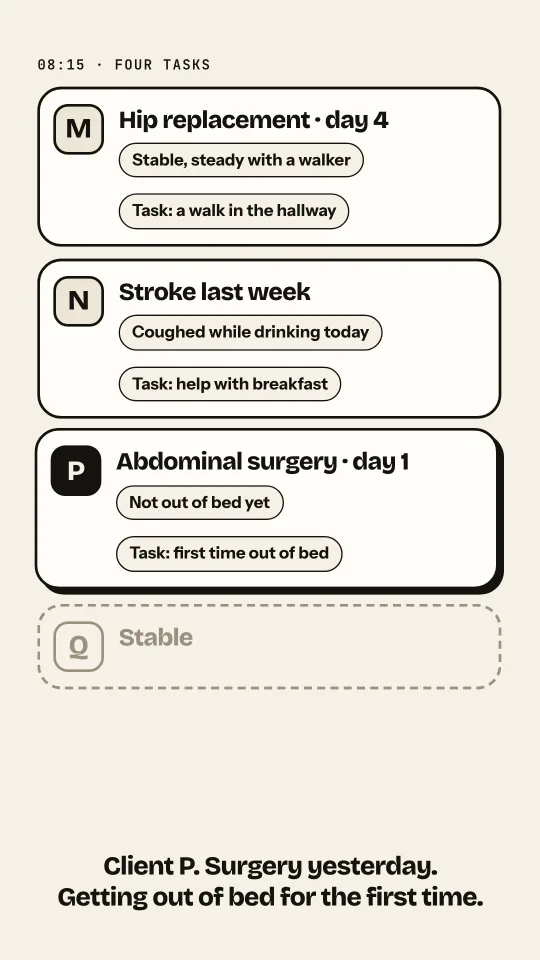
It is 08:15. You have more to do than one person can finish, and an unregulated care provider is working beside you.
- Client M is four days after a hip replacement, steady with a walker, and due for a walk in the hallway.
- Client N had a stroke last week and needs help with breakfast. This morning, client N coughed while drinking.
- Client P had abdominal surgery yesterday, and is getting out of bed for the first time.
- Client Q is stable, and needs a bed bath and mouth care.
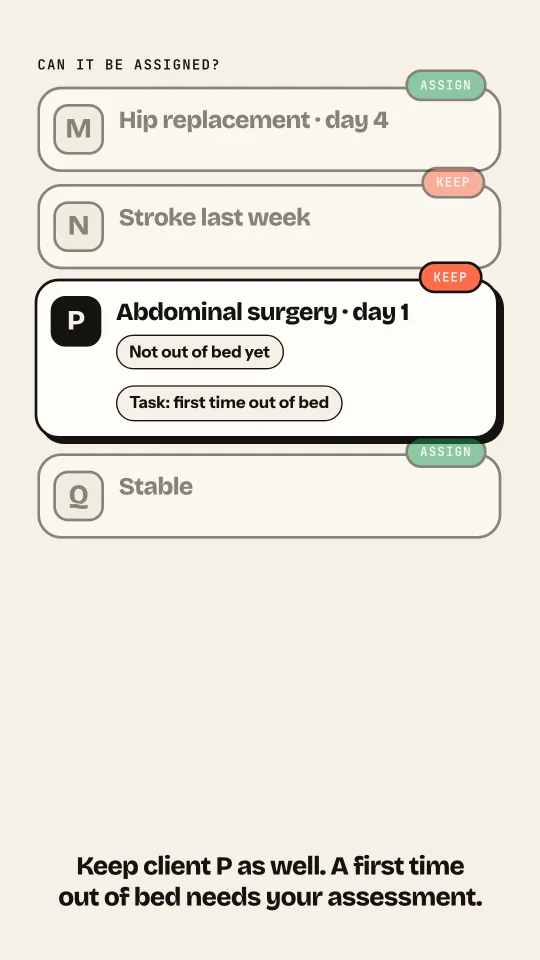
Client M's walk can be assigned. The client is stable, the task is routine, and it is in the plan of care. Client Q's bath can be assigned for the same reasons.
Which tasks stay with you
Keep client N. Helping with a meal is usually routine. A new cough while drinking is a change, and a change needs your assessment first.
Keep client P as well. A first time out of bed after surgery needs you there, to assess how the client responds.
The client decides each answer
The client decided each answer, and a client can change overnight. A meal that was safe to assign yesterday needs you this morning.
When the task can be assigned, the next question is who takes it. See who you assign the task to.