Teaching clients their rights: say it plainly, then ask to hear it back
How a nurse teaches a client their rights and teaches a new care provider what to do, then checks understanding with a teach-back question.
- A client has the right to ask to see their own record.
- A client has the right to be told about each treatment, and to say yes or no.
- “Do you understand?” checks nothing. Ask the person to say it back.
To teach clients their rights, a nurse says the right in plain words and then asks the person to say it back. “Do you understand?” checks nothing, because most people just say yes. This guide follows one nurse who teaches a new care provider and a new client on the same day.
“You're not allowed to see your own chart”
A new care provider on your team has just told a client, “You're not allowed to see your own chart.” That is not true. A client has the right to ask to see their own record.
First find out what happened. Ask the care provider what the client asked and what was said.
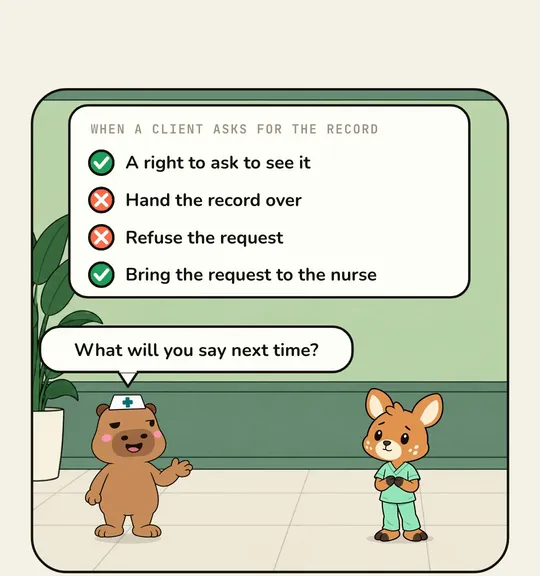
Teach the care provider what to do
| When a client asks for the record | Do it? |
|---|---|
| Hand the record over | No |
| Refuse the request | No |
| Bring the request to the nurse | Yes |
Then check that it landed. Do not ask, “Do you understand?” Ask, “What will you say next time?” The care provider says, “I'll tell the client that I'm getting the nurse.” Then you go back to the client and take the request through your employer's process.
Teach the client her rights
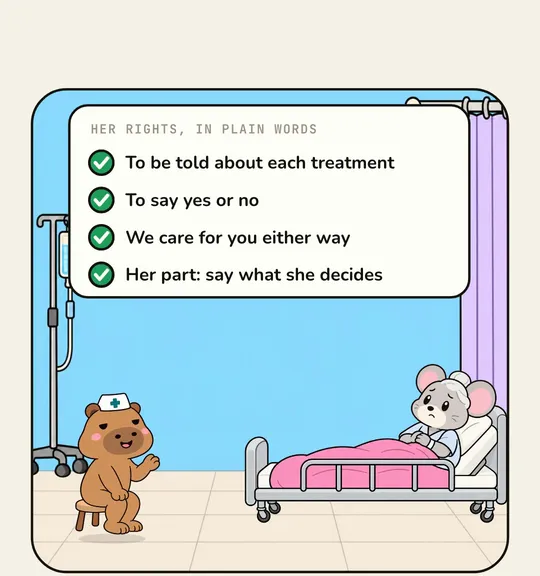
The same day, a client admitted this morning tells you, “I'm in hospital, so I have to accept it all.” So you tell her in plain words:
- You have the right to be told about each treatment.
- You can say yes or no.
- We care for you either way.
- Your part is to tell us what you decide, and to ask when something is unclear.
Ask to hear it back
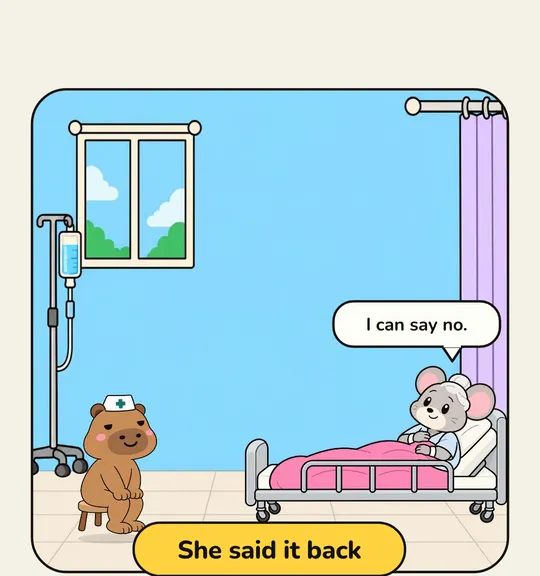
Then you ask, “In your own words, what can you do if you don't want a treatment?” She says, “I can say no, and you will still look after me.” Now you know she understood.
Suppose she had only nodded. A nod is not understanding. So you fill the gap and ask again, with an interpreter if you do not share a language.
The process for record requests differs between provinces and between employers. Follow your agency's policy. See the right to refuse treatment, or read the whole topic.