Privacy breach in nursing: recognize it, stop it, report it
A colleague opens a famous client's chart out of curiosity. What counts as a privacy breach, and what a nurse does about a chart, an elevator and a selfie.
- Looking out of curiosity is a breach, even if nobody is told.
- It counts whether or not anyone meant harm.
- You cannot promise to keep a breach quiet. Report it.
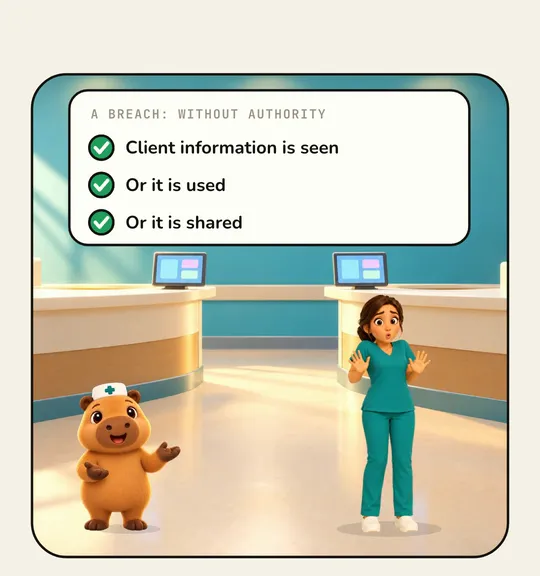
A privacy breach is client information that is seen, used or shared without authority, and it counts whether or not anyone meant harm. You recognize it, stop it and report it. You never hide it, and you never join it. This guide follows three breaches in one day.
“Nobody will ever know”
At the desk, a colleague says: “Come and look, it's that famous actor's chart. Nobody will ever know.” The actor is a client on another unit, and neither of you gives him care.
Looking out of curiosity is a breach, even if nobody is ever told. So you don't look, and you ask her to close the record.
What counts as a breach
- Client information is seen without authority.
- Or it is used without authority.
- Or it is shared without authority.
It counts whether or not anyone meant harm. Opening a record without a work reason is one example: records, interpreting and the right to refuse.
You cannot promise to keep it quiet
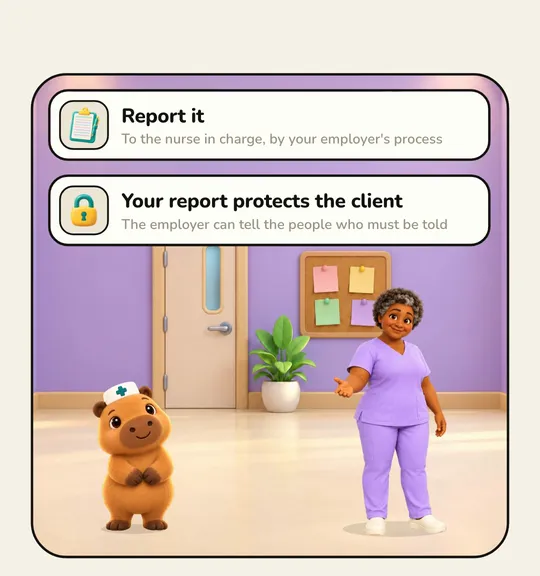
Your colleague says: “Okay, okay. Just please don't tell anyone.” You can't promise that. You report it to the nurse in charge, the way your employer's process states. Your report protects the client, because it lets your employer tell the people who must be told.
Two more breaches: an elevator and a selfie
| The breach | What you do |
|---|---|
| Two colleagues discuss a client by name in a crowded elevator | Stop it: “Let's finish this on the unit.” Then speak with them in private, and report it as your policy asks. |
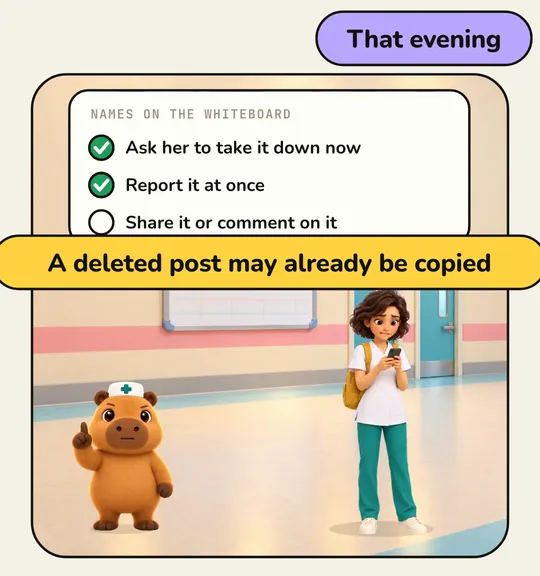
| A student posts a selfie, and the whiteboard behind her shows client names and room numbers | Ask her to take it down now, and report it at once, because a deleted post may already be copied. Do not share it or comment on it. |
Reporting processes differ between employers and provinces. Follow your agency's policy. To learn who may receive client information, read client confidentiality: who may know.