Acting on an ethical concern in nursing: facts, conflict, talk, act, review
A family asks you to keep a diagnosis from a capable client. Five steps for a practical nurse: don't lie, and don't decide alone.
- Feeling pulled two ways is your signal to slow down.
- Don't lie to a capable client, and don't give the diagnosis yourself.
- Take the concern to the team. Never decide alone.
To act on an ethical concern, slow down and work in five steps: get the facts, name the conflict, talk with the client, act inside your role, and review the result. This guide follows one practical nurse whose client asks, “Is it cancer?”, after the client's daughter asked the nurse to keep it from her.
A daughter asks you to keep a secret
The daughter stops you in the hallway. “Please don't tell my mother it's cancer. She'll give up.” Your client is seventy-nine and capable. Her biopsy shows cancer, and the physician plans to give her the result tomorrow.
That afternoon, your client looks at you and asks, “Is it cancer?” You feel pulled two ways. That feeling is your signal to slow down and work in steps.
Five steps for an ethical concern
| Step | What you do |
|---|---|
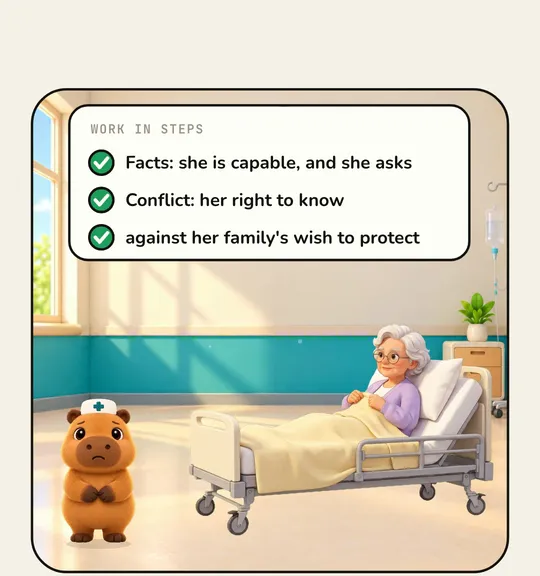
| 1. Facts | She is capable, and she is asking. |
| 2. Conflict | Truthfulness and her right to know pull against her family's wish to protect her. |
| 3. Talk | Start with the client. Say something like: that is an important question, and you have a right to an answer. |
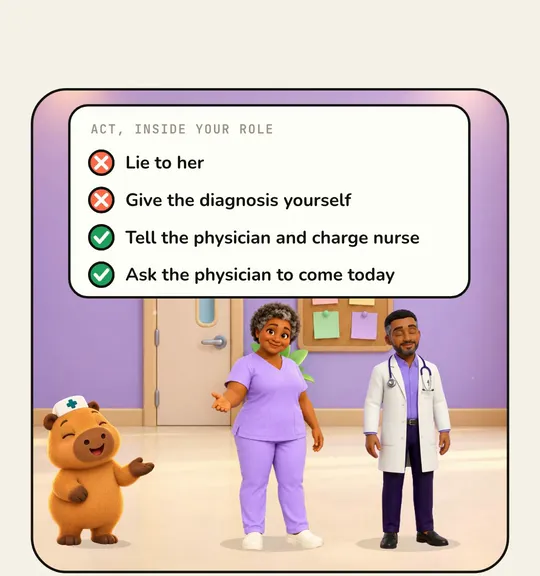
| 4. Act | Stay inside your role. Tell the physician and the nurse in charge, and ask the physician to come today. |
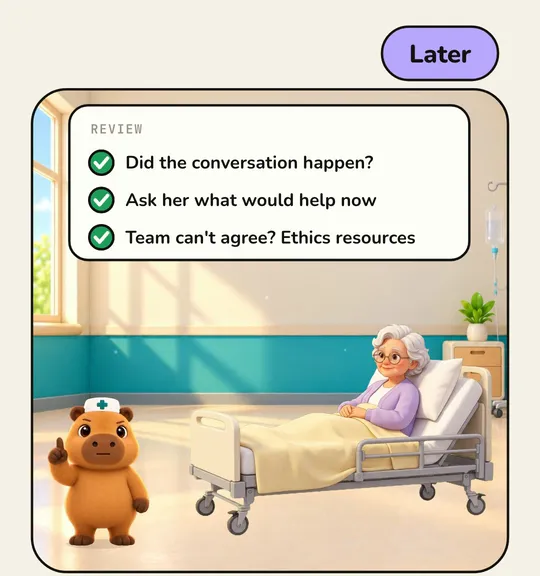
| 5. Review | Check that the conversation happened. Ask the client what would help now. |
What you do, and what you do not do
- You do not lie to her.
- You do not give the diagnosis yourself, because that news comes from the physician.
- You tell the physician and the nurse in charge what she asked.
- You ask the physician to come today.
You also tell her daughter, kindly, that you will not lie to a capable client.
Review the result, and use your ethics resources
An action is not finished when it is done. Later, you check that the conversation with the physician happened, and you ask your client what would help now.
If the team talked and still could not agree, you would ask for help from your ethics resources.
Not every hard moment is a dilemma. See how to spot an ethical dilemma. Her story continues in ethical issues and advance directives in nursing.