Admission, transfer and discharge in nursing: what travels with the client
At admission, transfer and discharge, the right information and the right safety checks move with the client. At discharge, teach, then use teach-back.
- Every move is a place where information can get lost.
- Two things travel with the client: the right information and the right safety checks.
- At discharge, teach, then ask the client to say it back.
At admission, transfer and discharge, two things must travel with the client: the right information and the right safety checks. At discharge, add a third: teach, then ask the client to say it back. This guide follows one client and one allergy from admission to home.
Every move is a place where information gets lost
Client W is 74. He comes in from home with a skin infection of the leg. He tells you: “Penicillin? That rash was years ago. Don't write it down.”
You write it down. An allergy recorded at admission travels with the client, even when the history is incomplete. An allergy left out can be lost at every move after that.
Two things travel with the client
| What travels | What it holds |
|---|---|
| The right information | Who the client is, the allergies, the plan and what is due. |
| The right safety checks | Identify the client, assess the client, and confirm the move is ready. |
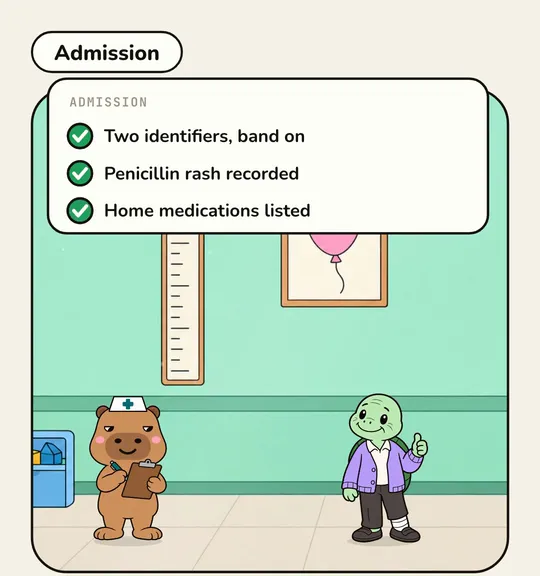
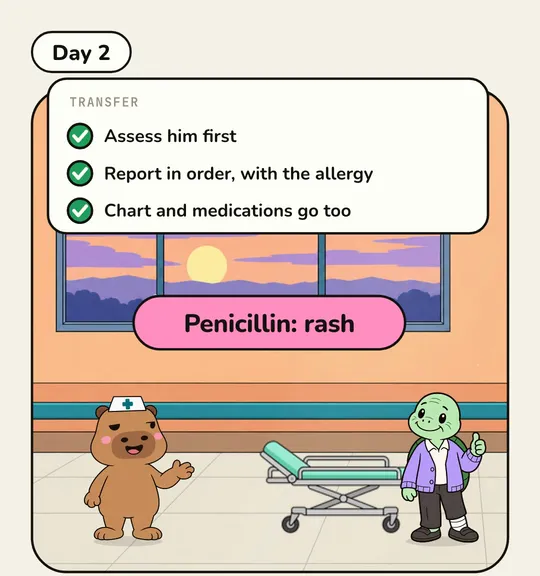
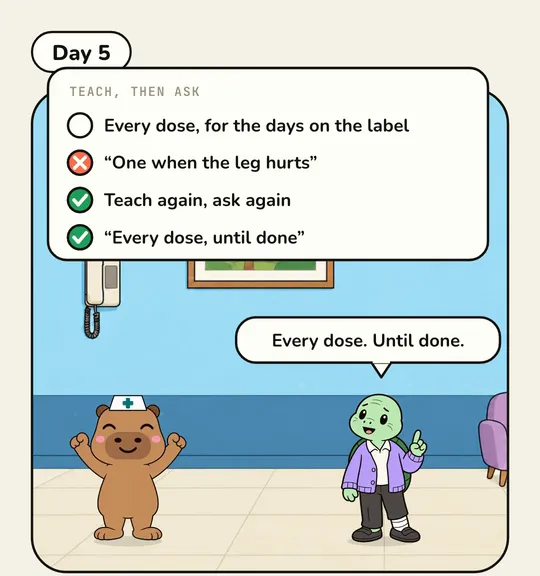
Admission
- Check two identifiers, and put the band on.
- Record the penicillin rash.
- List the medications he takes at home.
Transfer
Two days later, client W moves to another unit.
- Assess him just before he leaves. A change stops the move.
- Give your report in order, with the allergy in it, and with what is due and what is pending.
- Send the chart and his medications with him.
For the order of a report, see how to give a handoff report.
Discharge: teach, then ask
On day five, client W goes home with a new antibiotic. Teach in plain words: take every dose for the number of days on the label, even when the leg looks better.
Then ask him: “Tell me how you'll take this at home.” He says: “Easy. I'll take one when the leg hurts.”
So teach that part again, another way, and ask again. This time he says: “Every dose. Until the days on the label are done.” A client who still cannot say it back is not ready to manage alone. Report it before the client leaves.
Before the client goes home
- Give the written sheet, with the follow-up visit and who to call.
- Document what you taught.
- Document what the client said back.
He wanted you to skip one line. That line went with him to the next unit. Information and checks move with the client. Policy for admission, transfer and discharge differs by employer, so follow your agency's procedure.
Moves often happen on a busy shift with other needs. For how to put them in order, see prioritization and delegation in nursing.